By Michelle Boren, Founder of SacredLee
For two years now, my psoas has had a habit of speaking up when I least expect it. Toes to bar in CrossFit. Deep hip stabilization work on the Lagree Megaformer. Any ab exercise that puts weight on my tailbone. Without fail, after a big hike. The repetitive movement is pure torture on that muscle, and some nights it even wakes me, flaring the moment I try to roll over in bed. What I did not understand yet was that this traced back to a hip pain and pelvic floor connection almost nobody names out loud.
But if I am being honest, this issue reared its head long before CrossFit or Megaformer classes existed in my life. It started with pregnancy.
Late-term sciatica, the kind that is genuinely hard to describe unless you have lived it, so debilitating that I still remember, vividly, the seven-step process it took to roll out of bed in my eighth month, then crawl to the bathroom. Right side pain that no one could touch. Not for lack of trying. I saw a long list of practitioners, and none of them could reach it.
That pain stayed with me well through early motherhood. There were days I had to press my own thumb directly into the muscle, hard, just to walk without wincing. And the answer, every time, was some version of the same thing: "This is normal. You're petite. That's just your anterior pelvic tilt. Lay on a lacrosse ball. Stretch."
If anyone has ever tried to access this muscle with any real force, you already know what I mean. It is close to vomit-inducing. It feels like a deep, bone-level ache lodged in your spine, the kind no gentle touch could ever soften.
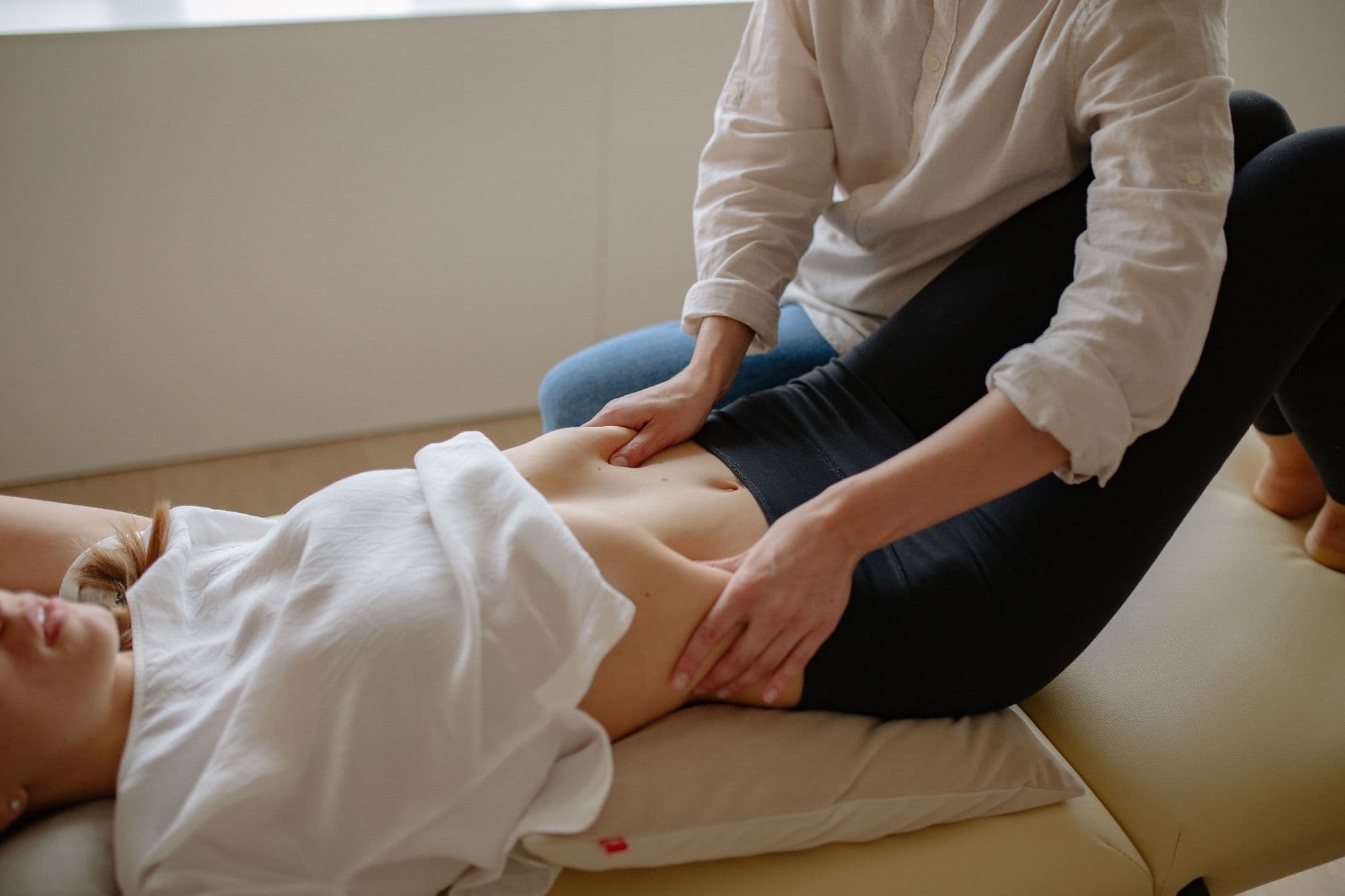
Fifteen years after my last child, on vacation of all places, I sat down with a chiropractor who specializes in the care of women's unique bodies. She evaluated me thoroughly and went straight for it. Then she said, "I'm writing you a prescription for pelvic floor therapy. This may be the only way to reach this deep-seated issue." Forgive the pun.
Color me surprised.
So I did what I always do. I went looking for the research. What follows is what I found, and what it means for anyone whose hip pain has never quite added up.
How Does Hip Pain Connect to the Pelvic Floor?
The pelvic floor and the hip are not separate systems, though they are almost always treated that way. A small, deep hip rotator called the obturator internus runs directly alongside the pelvic floor muscles and shares fascia with the iliococcygeus, part of the pelvic floor sling itself. It stabilizes the hip joint and doubles as secondary support for the pelvic floor. Tightness or weakness in that one hip muscle can translate directly into pelvic floor tension, and the reverse is also true.
The psoas, the muscle at the center of my own story, sits deep in the hip flexor group and attaches near the pelvic floor. When it stays chronically tight, whether from pregnancy, repetitive training, or prolonged sitting, it can create the kind of deep pelvic tension that feels impossible to locate, let alone stretch away. The piriformis and the inner thigh adductors play a similar role, referring pain into the pelvic region or forcing the pelvic floor to compensate when the hip itself is unstable.
Several pelvic health clinicians describe this as a chicken-and-egg problem. Hip dysfunction can destabilize the pelvis enough to show up as pelvic floor symptoms, and pelvic floor dysfunction can just as easily surface first as hip or low back pain. It is one reason a thorough pelvic floor assessment matters even when the presenting complaint is entirely about the hip.
What Does the Research Show?
This is not a fringe theory. A 2018 cross-sectional study published in Musculoskeletal Science and Practice examined 85 women presenting with low back and pelvic girdle pain at orthopedic physiotherapy clinics. The findings were striking: 71 percent had pelvic floor muscle tenderness, 66 percent had pelvic floor weakness, and 41 percent showed some degree of pelvic organ prolapse. Women with combined low back and pelvic girdle pain reported higher levels of disability than those with either alone.
This is one study among a growing, still-developing body of research connecting lumbopelvic pain and pelvic floor dysfunction in women. For the fuller evidence base, including the breathing-and-continence research and the studies on urinary incontinence and low back pain, see our Pelvic Floor Guide.
Why "Lay on a Lacrosse Ball" Was Never Going to Be Enough
The advice I was given for years was not wrong so much as incomplete. Stretching and self-massage can temporarily ease a tight psoas, but they cannot resolve dysfunction that originates deeper in the pelvic floor sling, in tissue that a lacrosse ball, or even a well-meaning practitioner's hands, was never designed to reach.
This is likely why so many women are told their pain is simply a byproduct of their frame, their posture, or their pelvic tilt, and left there. A pelvic floor physical therapist works differently, assessing the pelvic floor itself, often internally, to determine whether the underlying pattern is weakness, excess tension, or some combination of both. That distinction changes the entire treatment approach, and it is very likely the piece that was missing from my own care for over a decade.
Where You Have Agency
If a hip or low back pain pattern has never fully resolved, and especially if it began during or after pregnancy, it may be worth asking whether the pelvic floor has ever been assessed, not just the hip or the spine.
A pelvic floor physical therapist is a specialty within physical therapy, distinct from a general sports or orthopedic PT. A direct search for one, or a request for a referral, is a reasonable and often overdue first step. Symptoms that show up during specific movement patterns, such as loaded hip flexion, deep core work, or long periods on your feet, are useful information to bring to that first appointment, not something to minimize or explain away.
What supports you from the inside deserves the same care as what rests against your skin.
I am still early in this process, and I will share what pelvic floor therapy does for my own constitution as I go. But I already know this much: fifteen years is a long time to carry a pain that had a name and a known connection all along, one that no one along the way thought to mention.
This is one piece of a much bigger picture. For the fuller map of where pelvic floor therapy helps, from postpartum recovery to menopause, our Pelvic Floor Guide is the place to start.