By Michelle Boren, Founder of SacredLee
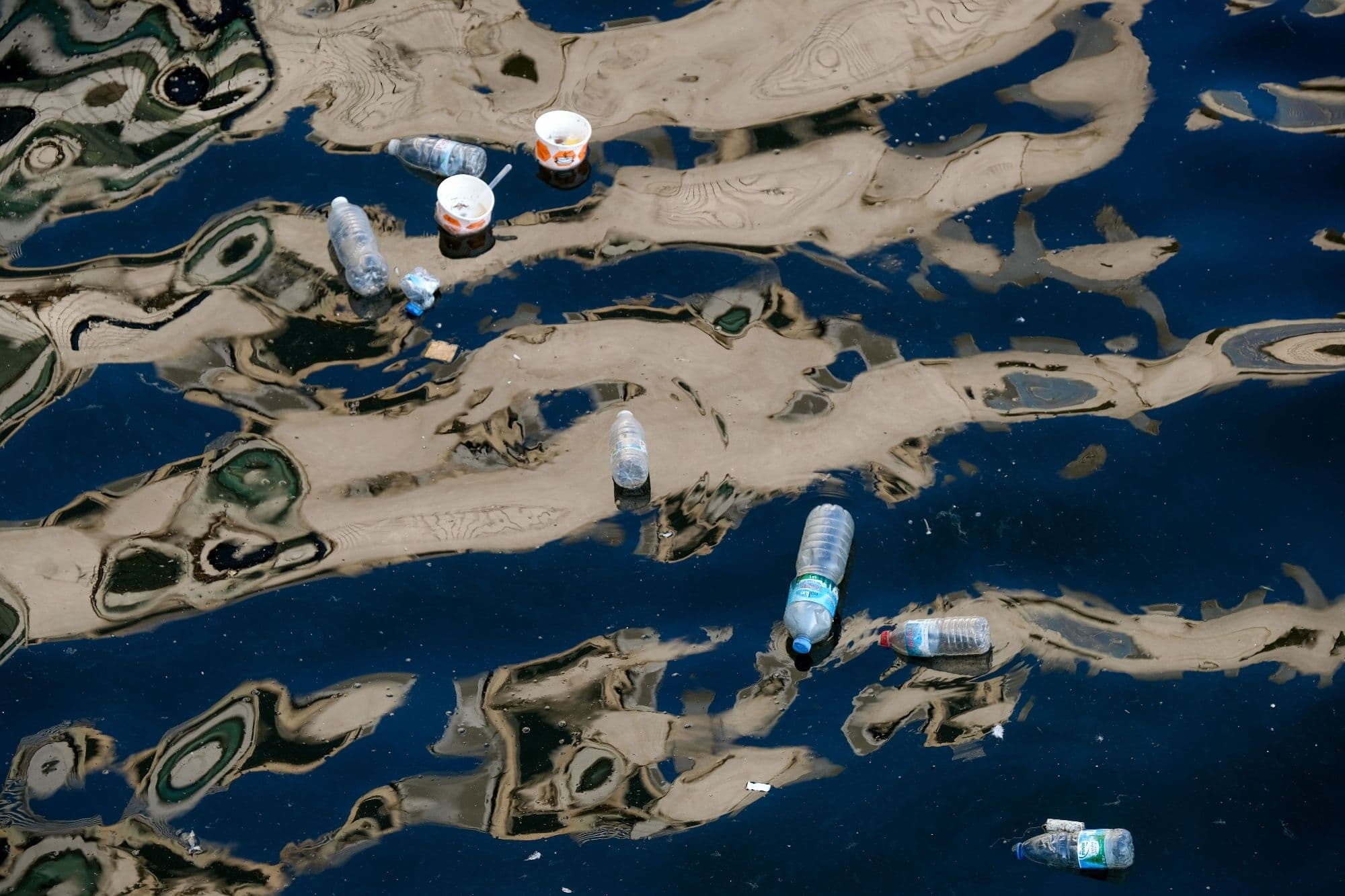
Getting rid of plastic water bottles was one of my earliest swaps, and I assumed it took care of most of my hidden plastic exposure. It felt obvious. Filter the water, pour it into glass, stop buying cases of something that would be empty in twenty minutes and sitting on this earth long after I was gone.
I remember feeling rather accomplished about it.
Then I started looking around.
The leggings I wore to work out were polyester. The fleece I threw on afterward was polyester too. Food came wrapped in plastic, leftovers went into plastic containers, tea steeped in plastic-lined bags, and half the products in my bathroom lived in plastic bottles. Even the cutting board I chopped dinner on was quietly shedding a little of itself every time a knife crossed its surface.
Removing the water bottle had not removed plastic from my life. It had simply taught me how to see it.
And once you start seeing it, hidden plastic exposure turns out to be everywhere, not just in the water bottle you already gave up.
Is Hidden Plastic Exposure Coming From Your Clothes?
This may be the least obvious place to start.
Polyester, nylon, acrylic, and many performance fabrics are forms of plastic made largely from petrochemicals. According to Textile Exchange's 2024 Materials Market Report, polyester alone accounted for 57% of global fiber production in 2023, the largest share of any fiber, natural or synthetic. Leggings, sports bras, fleece, pajamas, underwear, children's clothing, sheets, rugs, and upholstered furniture can all be made partially or entirely from synthetic fibers.
Those fibers do not remain perfectly intact. They shed during manufacturing, wearing, and washing, releasing tiny fibers into wastewater and the surrounding environment. Synthetic clothing was identified as a source of the microplastic fibers accumulating on shorelines worldwide as early as a 2011 study in Environmental Science & Technology, and the same fibers show up much closer to home: a 2017 study in Environmental Pollution found textile fibers, including synthetic microplastics, in both indoor and outdoor air samples.
Recycled polyester does not fully solve the exposure question either. It can reduce demand for virgin petroleum and keep existing plastic in circulation, which has real environmental value, but it is still polyester, and it still sheds microfibers.
This does not mean emptying your closet.
Start closest to the body and most constant. Underwear. Bras. Pajamas. Bedding. The leggings you sweat in for an hour every morning.
As things wear out, I look for GOTS-certified organic cotton, linen, hemp, wool, and thoughtfully sourced cellulosic fibers such as TENCEL. Not perfection. Just gradually moving plastic farther away from the places it spends the most time against us.
Why Does the Kitchen Deserve Special Attention?
If there is one place I am more particular about plastic, it is around heat and food.
Plastic food containers, takeout packaging, cutting boards, coffee pods, and packaged foods create many small points of contact throughout the day, and heat is where the exposure question gets more concrete. A 2023 study in Food Chemistry found that microwaving food in polypropylene containers formed a new chemical byproduct and increased the migration of plastic particles into the food, compared with the same containers at room temperature.
Cutting boards are another quiet source. A 2023 study in Environmental Science & Technology estimated that ordinary food preparation can release tens of millions of polyethylene and polypropylene microparticles from a single plastic cutting board over the course of a year, just from the mechanical wear of a knife. Initial toxicity testing on cells did not show a significant effect at the levels tested, so this is not a reason to panic over a cutting board you already own. It is a reason to retire one once it is visibly scored and worn rather than holding onto it indefinitely.
Which is why my kitchen rule is wonderfully uncomplicated: plastic and heat do not belong together.
I do not microwave food in plastic. I let leftovers cool before storing them. I reach for glass when storing acidic foods like tomato sauce. I use wood and stainless steel for utensils and cutting boards whenever practical.
You do not need an entirely new kitchen to do this. Save the glass jars your food already comes in. Put dinner on a ceramic plate before reheating it. Retire the scratched plastic cutting board when it reaches the end of its life.
Small changes remove repeated exposures without turning dinner into a science experiment.
Does Your Coffee or Tea Contain Plastic?
Some of the smallest sources are the easiest to overlook.
Certain tea bags use plastic polymers in the bag itself or as a heat-sealant, and a 2019 study in Environmental Science & Technology found that steeping a single plastic tea bag at brewing temperature released billions of microscale and nanoscale plastic particles into the cup. Not every tea bag is made this way, but it is common enough to be worth checking.
Coffee has its own plastic touchpoints: disposable lids, some coffee pods, plastic-lined cups, and components in certain brewing systems.
Again, the answer is not to become afraid of your morning coffee.
Loose-leaf tea with a stainless steel infuser is beautifully simple. So is coffee brewed through glass, stainless steel, or an unbleached paper filter and poured into a ceramic mug.
These are the swaps I love most, because the old-fashioned version is often the better version anyway.
Is Plastic Hiding in Your Bathroom, Too?
Walk into your bathroom and count the plastic.
Shampoo. Conditioner. Body lotion. Makeup. Toothpaste. Deodorant. Razors. Dental floss. Hair products.
Packaging is one part of the story, but plastic can also appear inside formulations themselves, including certain synthetic polymers used for texture, film formation, exfoliation, or staying power.
This is where label reading becomes more useful than a blanket fear of plastic packaging.
I care much more about what is inside the bottle and how I am using it than whether I can create a perfectly plastic-free bathroom. A beautifully packaged product is not automatically cleaner, and a product housed in plastic is not automatically toxic.
Look for transparency first. Then simplify.
Fewer, better products usually accomplish more than replacing fifteen conventional products with fifteen products labeled clean.
Can You Breathe In Microplastics?
This is the part that surprised me.
Microplastics are not only something we ingest. A 2017 study in Environmental Pollution detected textile fibers, including synthetic microplastics, in both indoor and outdoor air, and a 2024 systematic review in the Journal of Exposure Science & Environmental Epidemiology found that calculated inhalation exposure to microplastics indoors was consistently higher than outdoors. Synthetic textiles, carpets, upholstery, and household dust all appear to contribute fibers to the air we breathe inside our own homes.
Think about what happens in a home all day: rugs are walked across, blankets move, clothing rubs together, dryers tumble synthetic fabric, upholstered furniture is used. Tiny fibers become part of household dust. For a deeper, room-by-room look at reducing dust and chemical exposure at home, see The Clean Home Audit.
You cannot vacuum your way to a plastic-free life.
But you can reduce the accumulation of dust with regular HEPA vacuuming, damp dusting rather than simply moving particles around, good ventilation, and a quality HEPA air purifier, particularly in the bedroom, where you spend roughly a third of your life.
And over time, when something genuinely needs replacing, natural-fiber rugs, curtains, bedding, and upholstery can quietly change the material landscape of a home.
Are Children More Exposed to Plastic Than Adults?
Children spend more time on floors, put their hands and objects into their mouths, and interact with toys, rugs, and household dust differently than adults do. The same 2024 systematic review on airborne microplastics found that infants had the highest estimated inhalation exposure of any age group studied, largely because of how much time they spend close to the floor.
That does not mean creating a sterile nursery.
It means being thoughtful about the high-contact things: a natural-fiber sleep space, fewer soft plastic toys when good alternatives exist, glass or stainless food containers as they get older, regular wet cleaning of floors and dust, and washing little hands before eating.
Once again, frequency matters more than perfection.
Why Is Food Packaging Such a Big Source of Plastic?
Then there is the plastic we barely notice because it never technically belongs to us.
The bag around the spinach. The tray under the fish. The film around the cucumber. The takeout container. The pouch. The wrapper. The disposable coffee lid.
Food packaging is one of the largest uses of plastic precisely because it is designed to be used briefly and discarded.
You cannot personally redesign the American food system from the grocery aisle. But you can choose glass over plastic when the option is reasonable, buy loose produce, use reusable produce bags, bring glass or stainless containers for leftovers when practical, and favor whole foods that do not arrive inside multiple layers of packaging.
There is a lovely side effect to this one: the foods with the least packaging tend to be the foods closest to their original form.
You Will Not Eliminate Plastic
I think this needs to be said plainly.
I have not eliminated plastic from my life, and I do not expect you to either.
Modern medicine depends on it. Cars depend on it. Electronics depend on it. Our homes are filled with it. Some applications are incredibly useful, and in others there simply is not yet a practical alternative.
The goal is not plastic purity.
The goal is to recognize where an incredibly useful material became so ubiquitous that we stopped asking whether it belonged everywhere we put it. That is what hidden plastic exposure really means: not one villain to eliminate, but a pattern worth noticing.
That is a different question.
Where I Would Start
If this suddenly has you looking suspiciously at everything in your house, do not.
Start with the exposures that are closest, hottest, and most constant.
Move hot food out of plastic. Replace a worn plastic cutting board with wood or stainless steel. Choose natural fibers the next time you need underwear, pajamas, or sheets. Brew tea without plastic. Filter your water and carry it in glass or stainless steel. Reduce household dust rather than obsessing over every plastic object you own.
If you also want to support what your body does with everyday exposures once they happen, How to Support Your Body's Detox Pathways is a natural next read.
Closing Reflection
And then stop. Live your life. When the next thing wears out, make a better choice.
Because toxin-conscious living was never supposed to become another form of anxiety. It is simply learning enough about the materials surrounding us that we can decide which ones deserve to stay.
You stopped buying plastic water bottles. That was not the finish line. It was learning to see what had been there all along.