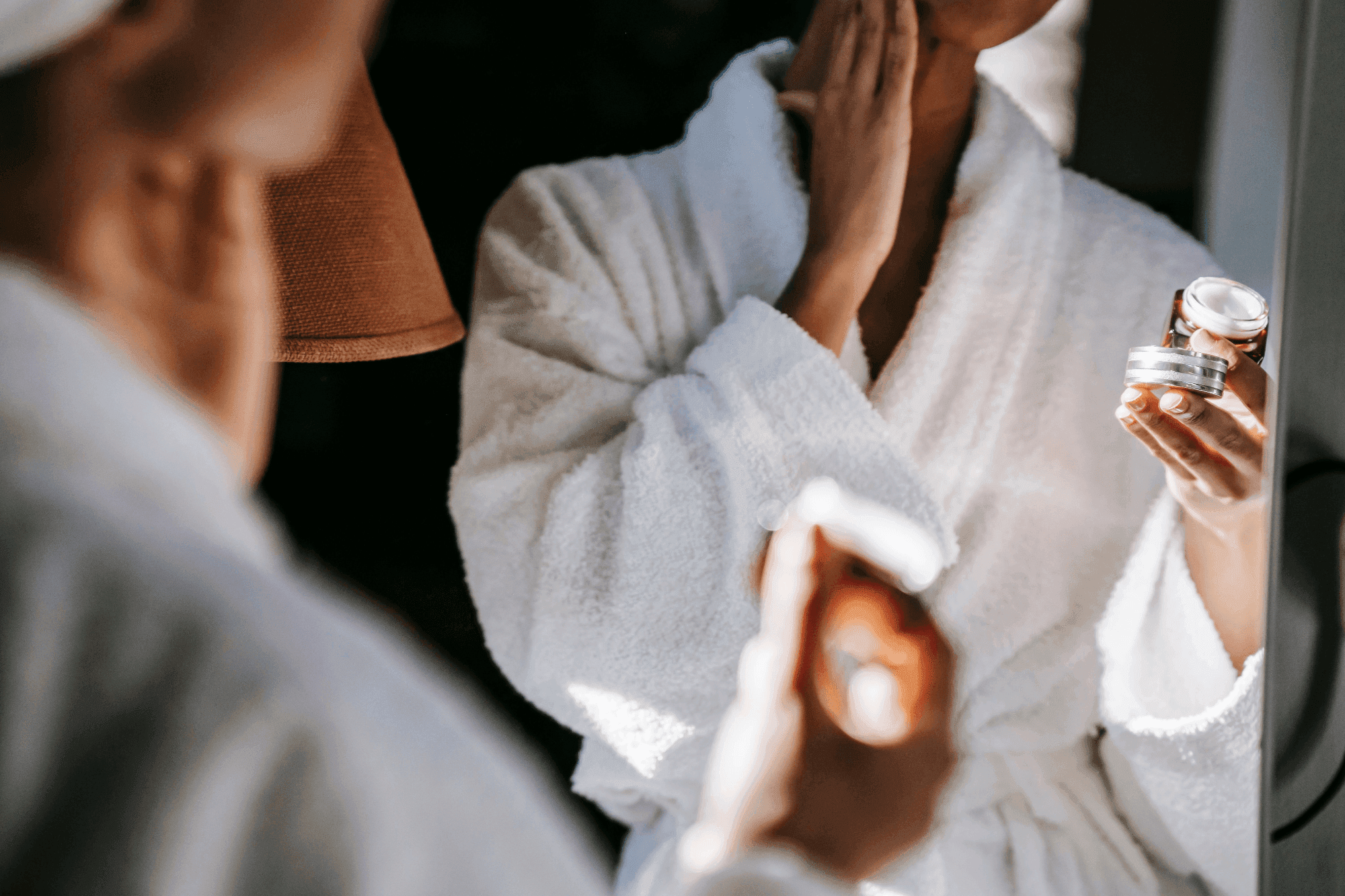
Like many of us, I learned about beauty by watching the women who came before me.
Our family shared one full bathroom, so I had a front-row seat each morning. I watched my mother transform her beautiful doe eyes with a careful coat of mascara. I watched my older sisters get ready for school, experimenting with new hairstyles and whatever makeup happened to be popular that year. Long before social media, beauty was something we learned by watching.
I fall into that generation that grew up before cell phones and socials. Our biggest influences were a well-worn copy of Seventeen magazine, an afternoon wandering the aisles of Walgreens, and the conviction that flavored lip gloss was glamorous. There was plenty of Aquanet, a perm or two, and more questionable fashion choices than I'd like to admit.
Looking back, what strikes me isn't that we wanted to feel beautiful. Women have always wanted that.
From natural pigments staining the lips of our ancestors to Victorian corsets, flapper girls with bold red lipstick, and the freedom we have to express ourselves today, the desire to adorn ourselves is as old as humanity itself.
What has changed isn't our desire for beauty. It's chemistry, which is exactly why clean beauty has become its own category rather than a niche.
The last century brought sweeping innovation to the cosmetic industry. Products became longer lasting, more water resistant, more colorful, less expensive, and easier to manufacture. Along the way came synthetic fragrances, PFAS, plastic polymers, preservatives, and thousands of ingredients our grandmothers never had to think about.
Our skin is remarkable. Every day it protects us from the outside world while allowing us to experience it, to feel warmth, a child's hand, the ocean, the wind. It is an extraordinary barrier, but it is not impenetrable.
Think about a birth control patch for a moment. We trust that a small patch on the skin can deliver enough hormone into the bloodstream to prevent pregnancy. That is because certain molecules are specifically designed to pass through the skin barrier.
Most skincare does not work that way.
Your skin is very good at keeping things out. But some cosmetic ingredients, including certain chemical sunscreen filters, penetration enhancers, PFAS, and other small, fat-soluble compounds, have been shown to move beyond the surface and into the body. The question is not whether everything is absorbed. It is which ingredients are designed, or small enough, to get through.
Healthy skin is remarkably protective. But when that barrier is disrupted by eczema, psoriasis, severe acne, or even small cuts, it becomes more permeable. That is one more reason I encourage simpler formulas and thoughtful ingredients, especially for anyone whose skin is already working hard to heal.
Beauty is also one of the most layered exposures in a woman's day. Cleanser. Serum. Moisturizer. Sunscreen. Foundation. Lipstick. Fragrance. Used morning and night, year after year, those individual products become part of a much larger picture. I have never regretted using fewer, better clean beauty products. But one look at a few old high school photos, and a heavy hand is easy to spot, and easy to regret.
As we move through each category, I will show you where the evidence is strongest, which ingredients deserve a closer look, where a thoughtfully vetted clean beauty replacement truly makes a difference, and, ultimately, where less is more.
The goal is not to buy more. It is to expose yourself to less. That is the SacredLee way.
In this guide: Why It Matters, Reading the Label, Clean Skincare, Non Toxic Sunscreen, Non Toxic Makeup, Non Toxic Nail Polish, Non Toxic Fragrance, Your Action Plan, and a few questions worth answering.
Clean Beauty: Why It Matters
Here is the idea that matters most, and the one many clean beauty conversations miss.
Toxicologists have long understood something called the mixture effect. Individual chemicals may each be present below their own safety threshold, yet the body is not exposed to them one at a time. It encounters them together, from multiple products, over many years.
Regulation evaluates ingredients individually. Real life does not.
Beauty is one of the few categories where layering is the norm. A typical routine may include ten or more products before breakfast, each contributing small amounts of preservatives, fragrance compounds, plasticizers, pigments, UV filters, and other ingredients. On their own, many fall within regulatory limits. Together, they become part of a cumulative exposure that science is only beginning to understand.
Many cosmetic ingredients are also well under the 500-dalton mark, a benchmark scientists use to estimate whether a molecule is small enough to penetrate the skin. Size alone does not determine absorption, but it is one of the reasons certain compounds deserve a closer look.
Adding to that complexity, terms like "natural," "clean," and "non toxic" remain largely unregulated in the beauty industry. The labels that matter most are a transparent ingredient list, meaningful third-party certifications, and brands willing to disclose exactly what is inside their clean beauty products.
Reading the Label
The front of the bottle is marketing. The back is where the story lives.
One of the most empowering things you can learn is how to read an ingredient list. Once you know what to look for, the words clean, natural, and non-toxic become far less important than the ingredients themselves.
A handful deserve extra attention: undisclosed fragrance or parfum, parabens (methyl-, propyl-, butyl-, and ethylparaben), phthalates, formaldehyde-releasing preservatives, PEG compounds, chemical sunscreen filters such as oxybenzone and octinoxate, and plastics like polyethylene and PMMA. You do not have to memorize every ingredient. Just learn to recognize the handful that deserve a second look.
Free Swap: Read one ingredient label today. If you see fragrance listed without any explanation, remember that a single word can represent dozens, or even hundreds, of undisclosed compounds. Accessible: Use a free ingredient database like EWG's Skin Deep or the Yuka app to better understand the products you already own. Vetted: Brands that disclose every ingredient, avoid unnecessary synthetic fragrance, and are transparent about their testing and sourcing.
Clean Skincare
Skincare is one of the few rituals we repeat every single day. Morning and night, often for decades. That consistency is exactly why thoughtful ingredients matter more than miracle ingredients, and why clean skincare is worth the extra attention.
Healthy skin is remarkably good at protecting us, but many skincare products are intentionally formulated so beneficial ingredients can penetrate the upper layers of the skin. The question isn't whether every ingredient enters the bloodstream. It doesn't. The better question is whether the products we use every day support healthy skin, or quietly add unnecessary exposures.
Lotions deserve special attention because they're often applied over the largest surface area of the body. Arms. Legs. Chest. Back. Unlike a dab of eye cream or concealer, body lotion may cover nearly your entire skin surface every day. When choosing where to invest in non toxic skincare, start there.
The good news is that healthy skin usually asks for less, not more. A gentle cleanser. A well-formulated moisturizer. Daily sun protection. Most of us don't need a ten-step routine. We need products with ingredients we understand and a purpose we can explain.
And some of the most effective skincare never touches your face. Skin looks supple and plump when it is hydrated from within, and that depends less on how much water you drink than on whether your cells can actually hold it. That is a matter of minerals, the balance of sodium, potassium, and magnesium that lets water move into the cell rather than pass straight through you. No serum can replicate what real hydration does from the inside, which is why we treat it as the foundation of skin health, covered fully in the Cellular Hydration Guide.
Some of the best skincare is a practice, not a product. Facial gua sha, a few minutes of gentle lymphatic massage, or light tapping along the cheeks and jaw help move the fluid that pools overnight, easing puffiness and giving the face a natural lift. Work in the morning, always from the center of the face outward and down toward the neck, with a drop of oil so the tool or your fingers glide. It costs nothing, and it supports the same lymphatic flow we cover in the Detoxification guide.
Free Swap: Simplify your routine. If you don't know why you're using a product, or haven't reached for it in months, it may not deserve a place on your shelf. Accessible: Fragrance-free cleanser, moisturizer, and body lotion with short, transparent ingredient lists. A Gua Sha Stone promotes lymphatic drainage. Vetted: Vintner's Daughter, Le Balm, Living Libations, and other non toxic skincare brands that prioritize botanical ingredients, ingredient transparency, and thoughtful formulations.
Non Toxic Sunscreen
If there is one product worth wearing every day, it is sunscreen, and finding a non toxic sunscreen you actually enjoy wearing makes that habit easier to keep.
The science here is remarkably consistent: protecting your skin from ultraviolet radiation is one of the most effective things you can do to reduce premature aging and lower your risk of skin cancer.
There are two primary types of sunscreen. Mineral sunscreens use zinc oxide or titanium dioxide to reflect and scatter ultraviolet light at the skin's surface. Chemical sunscreens use UV filters that absorb ultraviolet energy before it damages the skin. Several commonly used filters, including oxybenzone and octinoxate, have been shown to enter systemic circulation, and ongoing research continues to examine their potential endocrine and environmental effects.
For everyday use, we prefer non-nano zinc oxide. It provides broad-spectrum protection, is well tolerated by most skin types, and avoids many of the concerns associated with older chemical UV filters, which is why it anchors most non toxic sunscreen formulas.
A note on titanium dioxide: non-nano titanium dioxide used in creams and lotions is generally considered safe. The greater concern is inhalation from loose powders and spray products, where fine particles can be breathed into the lungs.
Free Swap: Remember that sunscreen is only one part of sun protection. Seek shade during peak afternoon hours, wear a wide-brimmed hat, and choose lightweight protective clothing whenever possible. Accessible: A non-nano zinc oxide mineral sunscreen with a short, transparent ingredient list. Vetted: Attitude, Thrive Causemetics, and Sun & Sol are third-party-tested brands that meet our standard for the best non toxic sunscreen.
Non Toxic Makeup
Makeup is deeply personal. It isn't about hiding who we are. At its best, it's an expression of creativity, confidence, and joy.
It also deserves a closer look because some of it doesn't simply sit on the skin.
Lipstick is the clearest example. Small amounts are naturally ingested throughout the day, and FDA testing has found trace amounts of lead in many lipsticks. Mineral pigments and color cosmetics can also contain naturally occurring heavy metals, making ingredient sourcing and independent testing especially important, and non toxic makeup brands that test for these are worth seeking out.
Long-wear formulas deserve a second look as well. The very qualities that make them resistant to sweat, water, and transfer often rely on synthetic polymers or PFAS-related chemistry. Not every long-wear product contains these ingredients, but they are worth checking for.
The goal isn't to wear less makeup. It's to choose non toxic makeup made with cleaner pigments, transparent ingredient lists, and companies willing to explain exactly what's inside.
Free Swap: Give your skin a break whenever you can. A little coconut oil on the high points of the face, under the eyes, along the collarbone, or on the legs creates a healthy glow while deeply moisturizing the skin. Accessible: A clean tinted moisturizer, cream blush, or lip gloss instead of heavier, long-wear products. Vetted: Attitude, ILIA, and The Good Mineral, non toxic makeup brands we've found to prioritize cleaner pigments, thoughtful formulations, and ingredient transparency.
Non Toxic Nail Polish
The nail category is its own exposure, and an easy one to overlook. Conventional polishes have long carried the "toxic trio" of formaldehyde, toluene, and dibutyl phthalate, which is why "3-free," "5-free," and "10-free" labels exist and why non toxic nail polish is worth seeking out specifically. Gel manicures add a second concern: a 2023 University of California study found that the UV lamps used to cure gel polish damage DNA and cause mutations in human cells. It is the lamp, not just the polish.
Free Swap: Give your nails regular breaks from polish, and skip gel when you can. Accessible: A "10-free" water-permeable polish, and if you do get gel, apply mineral sunscreen to your hands first or wear UV-protective gloves. Vetted: A clean, "10-free" non toxic nail polish line.
Non Toxic Fragrance
Fragrance is perhaps the most overlooked exposure in the beauty routine, and non toxic fragrance is one of the easiest swaps to make once you know what to look for.
The single word "fragrance" or "parfum" on an ingredient list can legally represent dozens, sometimes hundreds, of undisclosed chemicals protected as trade secrets. Among them may be phthalates, solvents, preservatives, and other fragrance compounds that manufacturers are not required to list individually.
And perfume is only the beginning. Synthetic fragrance often appears in body lotion, shampoo, conditioner, deodorant, body wash, cosmetics, laundry products, candles, and even products marketed as "unscented."
For many women, simply choosing fragrance-free personal care products is one of the highest-impact changes they can make. That doesn't mean giving up the beautiful scent. It means becoming intentional about where it comes from.
Free Swap: Skip synthetic perfume most days and allow your skin, hair, and home to have a scent of their own. Accessible: A naturally scented essential oil blend or a fragrance brand that fully discloses every ingredient it uses. Vetted: Natural fragrance houses committed to complete ingredient transparency, botanical ingredients, and phthalate-free formulations, our standard for non toxic fragrance.
Your Action Plan
You do not need to replace everything at once. Use things up, then choose better as you go.
Start here, free and immediate: Read the labels of the five products you use most. Simplify your routine. Choose shade and a hat before you reach for sunscreen.
Small swaps, under $30: A non-nano zinc sunscreen. A clean lip tint in place of leaded lipstick. A phthalate-free scent.
When you are ready, bigger investments: Transition your core skincare to a fully disclosed, third-party-tested clean beauty line, one product at a time as each runs out.
Everything we have vetted lives in the For Beauty collection.
SacredLee earns affiliate commissions on some products listed here, at no additional cost to you. We only recommend what has cleared the SacredLee Approved standard. We would rather lose the commission than lose your trust.
Sources
The mixture effect and combined low-dose exposures: peer-reviewed reviews on endocrine-disrupting chemical mixtures.
The 500-dalton rule for skin penetration: Bos & Meinardi, Experimental Dermatology (2000).
Oxybenzone and octinoxate enter systemic circulation and act as endocrine disruptors: EWG's Guide to Sunscreens and a 2023 review of more than 250 studies.
Lead in lipstick and cosmetics (FDA testing and recommended limits): US FDA, Lead in Cosmetics.
UV nail-lamp DNA damage: University of California San Diego (2023), published in Nature Communications.
Nail polish "toxic trio" (formaldehyde, toluene, dibutyl phthalate): California Department of Public Health, Safe Cosmetics Program.
Product vetting tools: EWG Skin Deep and the Yuka app.